


Directory of Social Change to close after 50 years

Howard Lake | 15 October 2026 | News

The charity that trained, informed and challenged generations of UK fundraisers has appointed an insolvency practitioner. Twenty-five jobs will be lost.
The Directory of Social Change (DSC), the training, publishing and funding-information charity founded in 1975, is to close. Its leaders announced on 14 October that an insolvency practitioner has been appointed to manage its closure.
Chief executive Debra Allcock Tyler and chair William Butler said they were devastated that DSC’s work had come to such a sudden end. Twenty-five staff are losing their jobs, and the leaders said they were doing all they can to support them. Allcock Tyler shared the announcement on LinkedIn with a single word of her own: “Heartbroken.”
Advertisement

Why is it closing?
In a joint statement, Allcock Tyler and Butler said DSC had been squeezed by the same pressures facing the charities it serves. They cited tighter budgets among its beneficiaries, rising supplier and National Insurance costs, increased competition, changes in how people buy and learn, and the growth of AI.
They also pointed to a funding landscape that does not favour causes as “unexciting and never-ending” as infrastructure.
DSC’s income-generating model, they said, had carried it through five decades of turmoil and allowed it to cross-subsidise its policy and campaigning work from its own independent resources.
The latest accounts show how earned that income was. In 2024, DSC reported income of £1.91 million against spending of £1.64 million, a surplus of about £270,000. Just £6,880 came from donations and legacies, and Civil Society reported that most of the rest came from publications. The Charity Commission register recorded 29 employees for that year. What has changed since is not yet public.
Is anyone trying to save it?
No rescue has been announced. The statement says that, despite “appeals to key funders”, trustees and staff were unable to find a way to continue. The leaders said they could not comment further.
Among the replies to Allcock Tyler’s LinkedIn post, Malcolm John, founder of Board Racial Diversity UK, hoped the response would “spark another concerted funding response”. No such effort has been announced.
In the meantime, the Funds Online subscription service will stay open for existing subscribers “for the time being”, and books and digital downloads remain on sale through the DSC website. People with existing course or event bookings will be contacted in due course. DSC’s final annual conference was held earlier this month. What happens to its publications, databases and brand is not yet known.
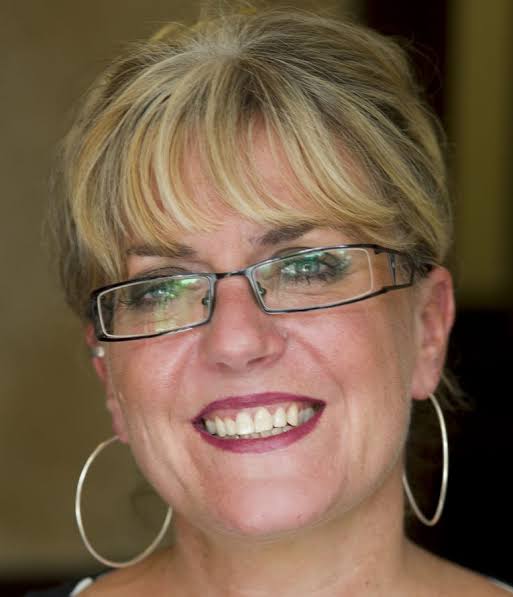
Fifty years of DSC
DSC began at a kitchen table in Maida Vale, London, where Michael Norton wrote a book called The Directory of Social Change. He had returned from a four-month trip to the USA in 1975 determined to give people the ideas, information and contacts to create social change. The first two volumes, on education and play and on community, appeared in 1977, followed by directories on women and housing.
Fundraising came next. Norton and his wife Hilary, who had written one of the first books on fundraising, ran four one-day seminars on trusts, government, companies and special events. All were fully booked. He transcribed and sold the sessions as loose-leaf packs, then books, and DSC was in both publishing and training.
In 1984, looking for a more sustainable income, Norton created the first Guide to Company Giving and asked Luke FitzHerbert to produce a Guide to the Major Trusts. Those guides gave DSC the social enterprise model that sustained it for the rest of its life. FitzHerbert became co-director in 1988, the year DSC registered as a charity, and the pair established a Liverpool office. DSC says it has supported hundreds of thousands of charities and community groups.
Fitzherbert died in a road accident in 2007.
Norton left in 1995 to found the Centre for Innovation in Voluntary Action, and was honoured with the Charity Awards’ Outstanding Achievement award in 2014. Mike Eastwood led DSC until 2001, when Allcock Tyler was appointed.
She has led DSC for 25 years. She co-founded and was the first chair of the Small Charities Coalition, has served on the Charity Commission’s SORP committee, and writes the Third Sector column. Her books include It’s a Battle on the Board, It’s Tough at the Top and The Pleasure and the Pain.
DSC employed around 35 people in London and Liverpool in 2016. It gave up its London office in December 2020 and its Liverpool office in September 2023, and has worked fully remotely since.
What it provided
- public, online and in-house training courses across fundraising, governance, finance and management;
- guides, templates and handbooks, including best-selling policy and governance titles;
- Funds Online, which lists more than 8,000 funders giving £8 billion in total;
- conferences and events;
- bespoke research for grant-makers, including on armed forces charities;
- policy and campaigning work, and a bookshop and library service.
What fundraisers will lose
For fundraisers, the loss is practical as well as sentimental. DSC’s guides and Funds Online were a standard route to finding and approaching trusts and companies, and its courses were, for many, a first formal training.
Steph Graham, now chief executive of GoodCRM, said Funds Online was “absolutely essential” in her fundraising days. Malcolm John called the Guide to Major Trusts “iconic”. Michael Newsome of UNICEF’s private sector fundraising team said DSC gave him “some of my earliest training in the sector”. Civil society and philanthropy specialist Fozia Irfan OBE called it the “first step in our learning” for many.
The immediate worry for working fundraisers is what happens to subscriptions, bookings and the research behind Funds Online once the insolvency practitioner has finished.
“A huge loss”
Tributes have poured in. Richard Radcliffe, a legacy specialist who has worked with DSC since the days of Norton and FitzHerbert, said its end “reflects the position of the whole sector and especially small charities”.
Joyce Fraser OBE, a former DSC trustee, said she was “shocked and deeply saddened”, and described a team of dedicated, passionate people. Charity director Andrew Johnston recalled mentor training in his first CEO role and, more recently, free support for his small charity, calling the closure “a massive loss to the charity sector”. Susan Booth, a chief executive, said DSC had been part of her career from her own development to being a customer, calling it a “huge loss for all of us”.
A self-funded model, tested
DSC was an unusual infrastructure body because it earned its living. It sold training, books and subscriptions to the sector, took no core grant, and used its surplus to pay for policy and campaigning. For decades that worked, and DSC’s closure will worry anyone who believes earned income is the answer for support organisations.
Allcock Tyler had set out the bind in a Third Sector column in September, written after the closure of Reach Volunteering. Infrastructure bodies are expected to be affordable to cash-strapped charities, offer free help where it is most needed, prove enormous impact, and still fund themselves. Their customers are charities, she wrote, and the ones that most need support are often least able to pay. This, she argued, was no failure of entrepreneurship but a tension built into the purpose. Funders, she said, tend to run for the exit when infrastructure bodies ask for longer-term money. Her conclusion now reads as a premonition: “We are not an optional service charge.”
A pattern of closures
DSC is the latest in a number of infrastructure bodies to close.
The Small Charities Coalition, which Allcock Tyler co-founded and first chaired, closed in 2022, and the Foundation for Social Improvement, behind Small Charity Week, followed in 2023. NCVO said at the time that FSI’s closure showed how much the wider infrastructure sector was under strain, saying that “infrastructure is a vital part of the voluntary sector ecosystem”. Children England then announced it would close after 81 years. The Civil Society Group called the three closures “a concerning weakening of the fabric supporting civil society”.
Research from 360Giving in 2023 found that more than 1,000 UK charity infrastructure bodies had closed over the previous 12 years.
Local bodies have fared no better. Greater Manchester Centre for Voluntary Organisation, one of the largest local infrastructure organisations in the country, collapsed in late 2024. Basildon, Billericay and Wickford CVS closed in 2025. Stronger Kent Communities announced in June that it would close at the end of September, citing the lack of funding for its future operations. And REACH Volunteering announced its planned closure last month, before announcing that it had received funding to rescue it for two years.
- Winners of DSC’s Social Change Awards 2020 announced (25 January 2020)
- DSC’s CEO publishes It’s Murder in Management book (15 January 2019)
- DSC opens pre-orders for The Guide to New Trusts 2026/27 (1 October 2026)


About Howard Lake
Howard Lake is consultant editor of UK Fundraising. He founded the site in 1994 and successfully sold it in 2022. As director of Giving X Ltd he is exploring growing giving on a massive scale.
He is the founder of Fundraising Camp and co-founder of GoodJobs.