


Denmark’s postal service ends letter deliveries this month

Howard Lake | 23 December 2025 | News
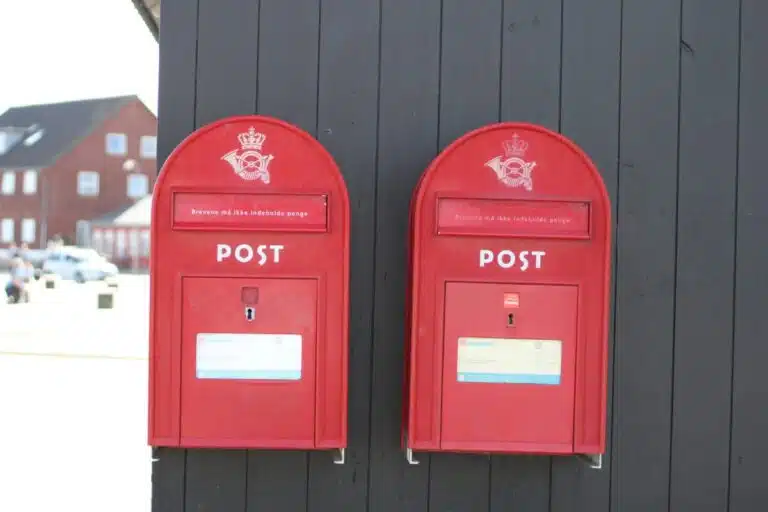
Denmark’s state-owned postal service PostNord will deliver its final letters on 30 December, ending more than 400 years of national letter post as it pivots fully to parcels from 1 January 2026.
The move is reshaping how Danish charities reach donors, accelerating a shift from traditional direct mail to digital and private sector delivery solutions. It was announced in March this year.
Why PostNord is stopping delivery of letters
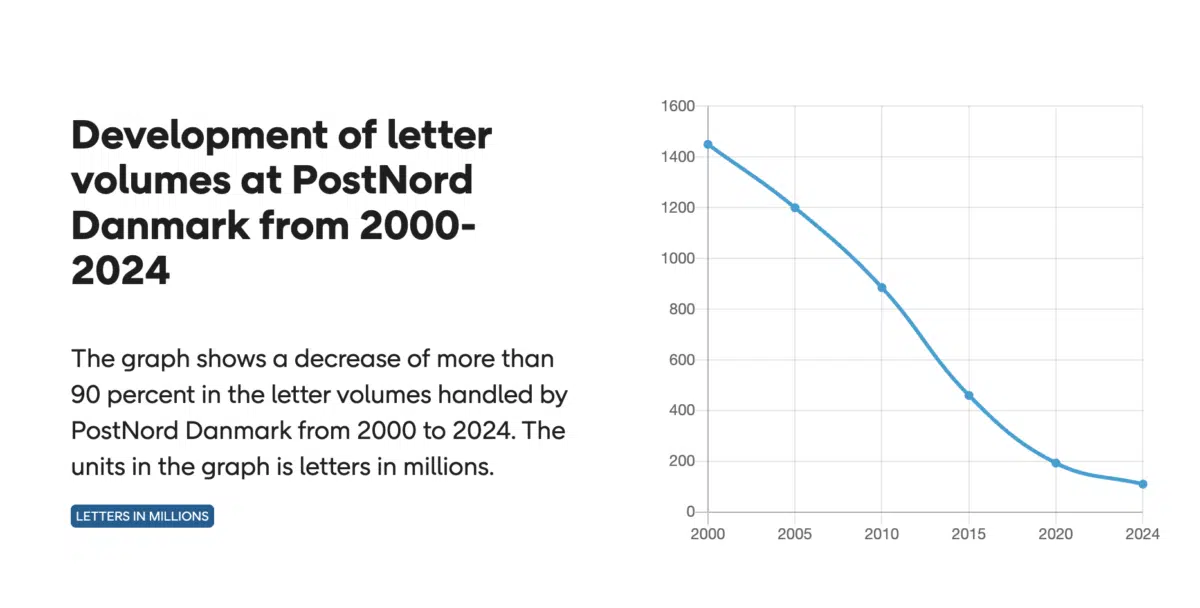
PostNord cites a collapse in letter volumes and the economics of running a nationwide network in a society that relies extensively on digital communications. Letter traffic has fallen by more than 90% since around 2000, dropping from a peak of nearly 1.5 billion items a year to about 110 million in the most recent year.
Advertisement

The letter business is no longer economically viable, according to PostNord, with rising unit costs and a single standard letter stamp now costing 29 kroner (£3.40), putting price-sensitive senders off using the mail.
From 2026 PostNord will focus on parcels, where volume continues to grow. The changes involved cutting thousands of jobs and removing around 1,500 red post boxes that have symbolised Danish postal services for generations.
PostNord also operates in Sweden. It is 40% Danish-owned and 60% Swedish-owned.
How Danes can still send letters
Letter post in Denmark is not disappearing entirely, but moves to a liberalised, largely private market from 1 January.
Domestic letter delivery will be handled primarily by private operator DAO/Bladkompagniet, which already distributes newspapers and addressed mail and is described by sector body ISOBRO as cheaper than PostNord for letter services.
From 2026, senders will typically have to take letters to DAO outlets or pay extra for home pickup, buying postage via online tools or apps rather than at post offices and traditional counters.
Charity fundraising in transition
The end of PostNord’s letter operations lands in a sector that has long relied on direct mail to acquire and retain donors. An ISOBRO briefing notes that 30% of its member organisations currently use PostNord for communication and fundraising, with others already buying services from DAO/Bladkompagniet.
ISOBRO warns that DAO will hold an effective nationwide monopoly from 2026 unless more operators enter the market, raising concerns about pricing and service quality for charities budgeting tightly for campaigns.
At the same time many organisations have already shifted a large share of donor communications to email, social media and “digital post”-style channels.
Making mail work harder
Sector experts argue that, despite widespread adoption of digital communications, physical mail still has a distinct role in Danish fundraising. Direct mail specialist Kim Lerborg, who has worked with major NGOs including Dansk Flygtningehjælp (Danish Refugee Council) and SOS Børnebyerne (SOS Children’s Villages), highlights the persistence of the physical envelope in donor behaviour.
Lerborg notes that emails with donation buttons “drown in the inbox,” while a physical appeal letter left on the kitchen table can be revisited several times, strengthening the relationship with the cause and increasing the likelihood of giving.
ISOBRO reports that members are reviewing channel mix and supplier contracts, with some planning to reserve physical mail for higher‑value segments and campaigns while ramping up digital journeys, testing whether lost mail volumes can be offset by online upgrades and recurring gifts.
There are no sector‑wide loss projections yet, but with roughly a third of fundraising charities having relied on PostNord, Danish charities face at least short‑term disruption and potentially higher costs as they migrate campaigns to DAO’s services or fully into digital.
For organisations with older donor bases or legacy giving programmes which are still heavily mail‑driven, the risk is that even a small percentage fall in response rates or a rise in postage could translate into significant income losses over the next few years unless digital replacement channels perform strongly.
Are other countries next?
Denmark is the first country to set a firm end date for nationwide state letter deliveries, but it is not alone in seeing the service under strain. Across Europe and beyond, national operators report double‑digit percentage falls in addressed letters as bills, banking and government communications move online.
In the UK, Royal Mail letter volumes have fallen from around 20 billion a year to under 7 billion by 2024, and the company is lobbying for a relaxation of universal service obligations, including fewer delivery days, though it has not announced an end to letters.
Canada Post is undergoing major cost‑cutting in response to declining mail and growing parcels, while Germany’s Deutsche Post plans thousands of job cuts in its letters division as it restructures for a digital era.
For charity leaders watching Denmark the lesson is that the universal letter‑post era is entering its final chapter. The Danish experience suggests that those fundraising teams which invest early in diversified, integrated digital and private‑sector mailing solutions will be best placed to protect income as the traditional postal channel contracts or disappears.
PostNord delivers its last letters on 30 December 2025.

About Howard Lake
Howard Lake is consultant editor of UK Fundraising. He founded the site in 1994 and successfully sold it in 2022. As director of Giving X Ltd he is exploring growing giving on a massive scale.
He is the founder of Fundraising Camp and co-founder of GoodJobs.