


Good fundraising experiences “boost charity support”

Howard Lake | 16 July 2026 | News
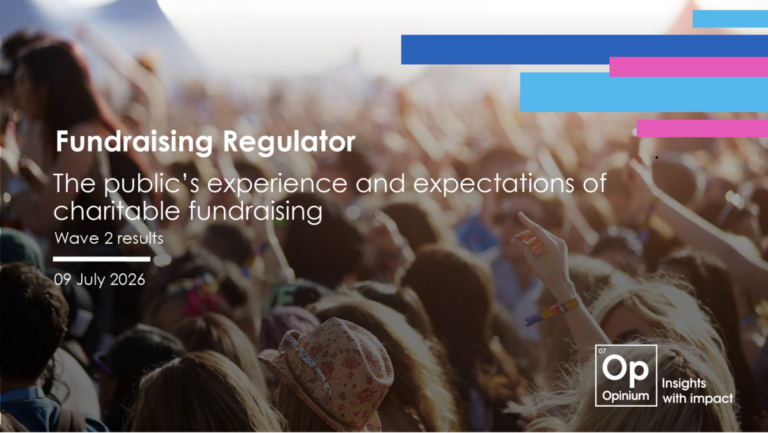
New research from the Fundraising Regulator points to encouraging improvements in how the public experiences charitable fundraising. It presents a clear link between positive experiences and a greater willingness to keep supporting charities.
The independent study was carried out by Opinium among a nationally representative sample of 3,018 UK adults (16+) between 6 and 20 May 2026. It updates the Regulator’s first wave of research from late 2023 and, with the organisation marking its tenth anniversary this year, sets a baseline for future waves. Because the questionnaire was revised between waves, not every figure is directly comparable, but where comparisons are possible they are informative.
Experience matters more than ever
Almost two-thirds of people who supported charities reported a positive experience over the past 12 months, consistent with the first wave.
Advertisement
Encouragingly, those who had positive experiences were significantly more likely to say they would support charities again in future. This correlation runs through the whole report. As the Regulator puts it, fundraising is often a charity’s “shop window”, and the data suggests every interaction genuinely shapes future giving.
Trust in fundraisers compared to charities
There is an important nuance here for the sector. While trust in charities themselves has slipped in this wave of the research, across both local and national charities, possibly reflecting negative media coverage, trust in charity fundraisers has held steady. The report suggests the individuals doing the fundraising may be having a stronger positive impact than the charity brand itself, which places real weight on the quality of frontline fundraising interactions.
Public and door-to-door fundraising on the up
Experiences of individual methods were rated more positively than in the previous wave across the board. Public fundraising (on the street, in shops or in shopping centres) saw one of the biggest shifts: positive experiences rose sharply, reversing the earlier picture where negative experiences outweighed positive ones.
Door-to-door fundraising remains, for the second time, the method people are least comfortable with and rate least positively. But it too has improved markedly since 2023, with comfort levels and positive experience both climbing.
It’s a reminder that the methods attracting the most scrutiny are also where sustained effort on standards shows up most clearly. Notably, comfort with online fundraising platforms actually dipped compared with the first wave, bucking the general upward trend.
Which fundraising methods does the public favour?
At the comfortable end of the spectrum, donating goods, sponsoring individuals, charity bags and charitable lotteries continue to sit well with the public.
A pronounced age divide
One of the report’s clearest distinctions is in views by age. Comfort with fundraising, positive experiences and the likelihood of giving again all tend to decline with age.
Younger people (particularly those aged 16–34) are far more comfortable with methods such as public fundraising, door-to-door, tap-to-donate and text donations than those aged 65 and over. Older supporters, by contrast, are more comfortable donating goods
Older audiences are also more cautious donors: while around a third of people do no checks before donating, that rises to more than half among the over-65s. For fundraisers, the takeaway is that the methods and reassurances that work with younger audiences won’t necessarily work to the same extent with older ones, and vice versa.
The Fundraising Badge earns its place
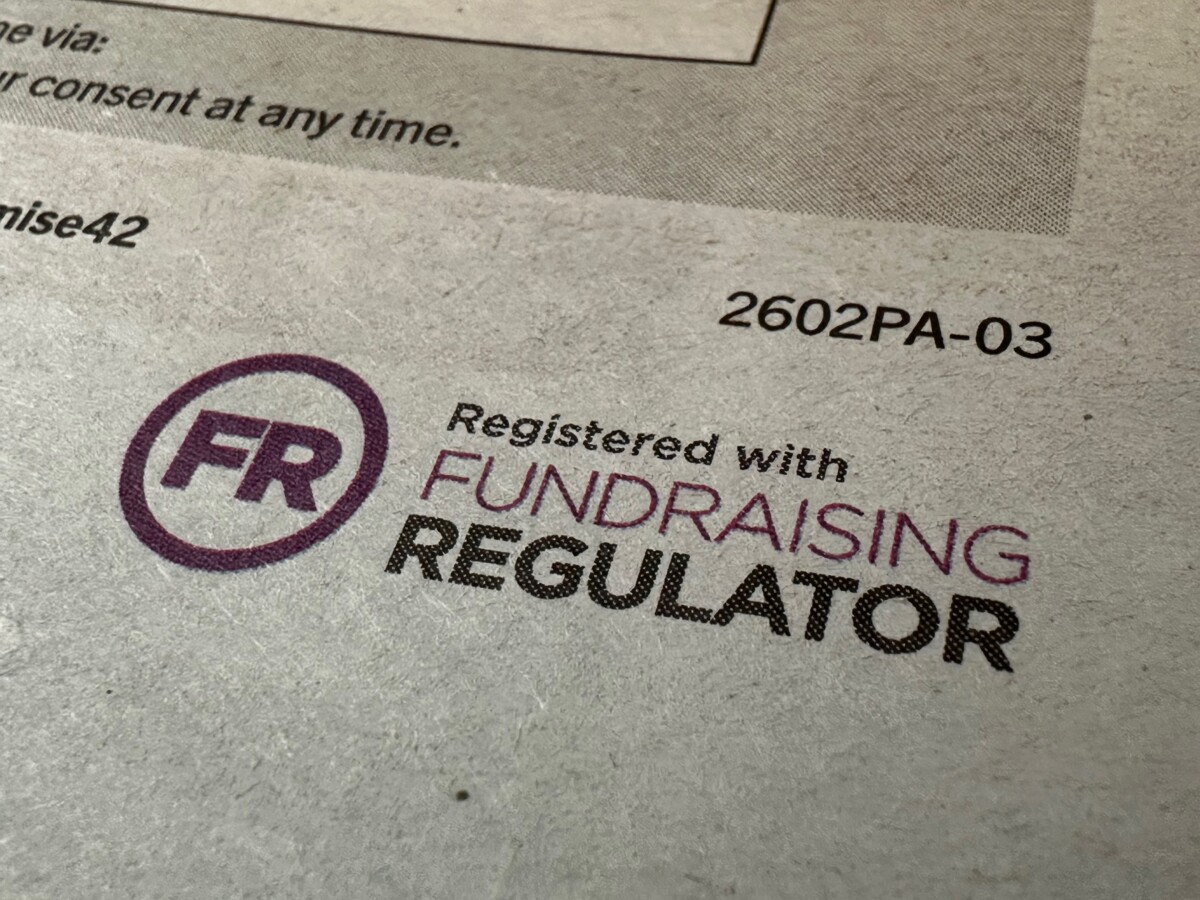
The research makes a strong case for the value of registration and the Fundraising Regulator badge. Almost one in five people said they had seen the badge in the past 12 months, and nearly half said they would be more likely to donate to a charity displaying it. Around half also said the badge made them view a charity more positively.
That effect is strongest among people already inclined to give and among those already aware of the Regulator, but that awareness is heavily skewed by age. Just over half the public are at least aware of the Fundraising Regulator (broadly in line with bodies such as the ICO), yet recognition of the badge among the over-65s sits at only 5%. Given that older people are among the most active charity supporters, the report flags clear scope for charities and the Regulator to raise the badge’s profile with that audience.
Why people hold back
For those who don’t trust fundraisers, the reasons are consistent and instructive:
- concerns that funds are wasted or misused
- a lack of transparency about how money is spent
- difficulty telling which charities are genuine
- and unease about how some charities fundraise.
For charities these remain concerns that can be addressed to some degree by better or clearer communication, visible regulation and good frontline practice.
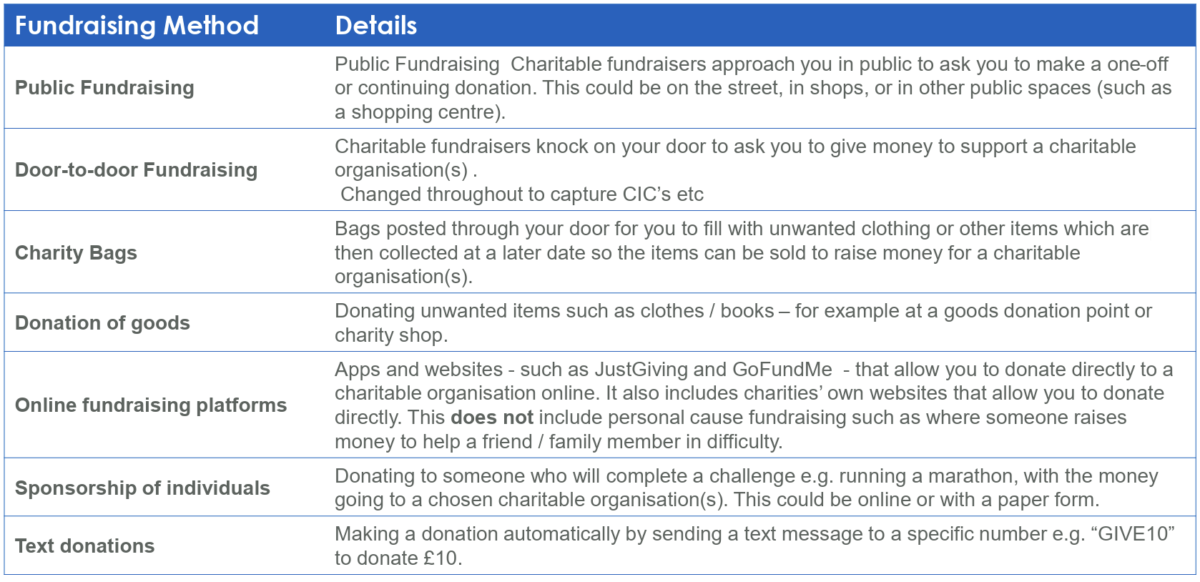
Which types of fundraising are covered?
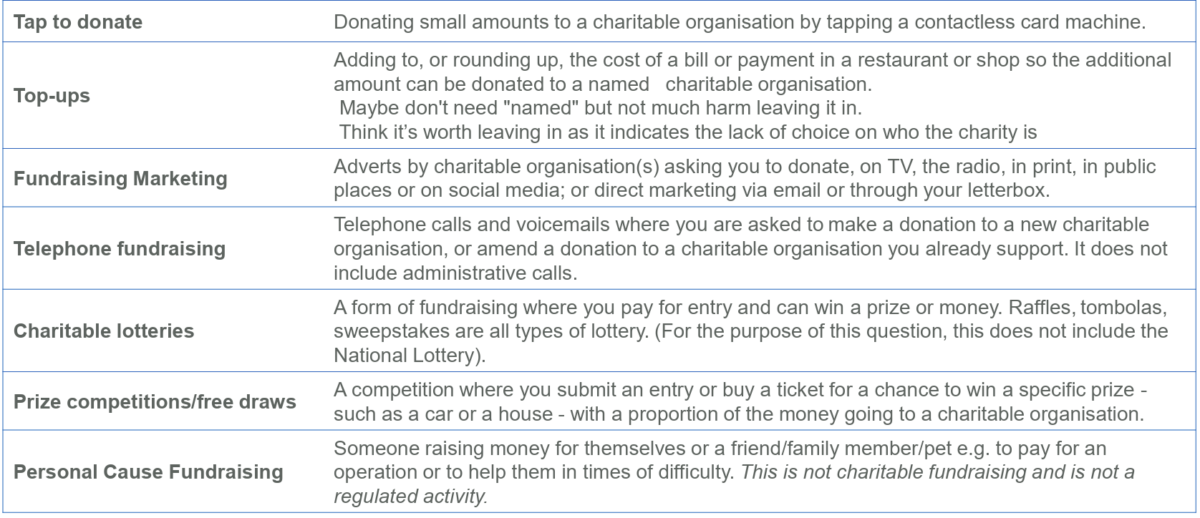
Here are the different fundraising techniques and channels examined in the research, and their definitions:
What the Regulator says
Paul Winyard, Head of Policy at the Fundraising Regulator, said the findings showed that people who have a positive fundraising experience are far more likely to keep supporting charities. He welcomed the improvements, particularly in areas that have historically attracted less favourable attention, describing this as a reflection of the sector’s commitment to raising standards.
At the same time he cautioned that there is “more work to be done”, and urged charities to keep investing in strong oversight, effective training and responsible fundraising practices so the public can give with confidence.
The sector’s response
Responding to the report, Claire Stanley, director of policy and communications at the Chartered Institute of Fundraising, said:
“This is a welcome report from the Fundraising Regulator, which highlights the positive attitude towards charities across the country.
“Public fundraising is a vital income stream for charities, with door to door in particular bringing in the highest number of new regular givers in recent years. So it’s extremely encouraging to hear that more people are reporting positive experiences of this fundraising method.
“We want to continue this upward trajectory and keep making improvements so that more members of the public have good experiences when they engage with charities. We have been working closely with our public fundraising members over the past two years to create new partnerships guidance and our recently introduced training modules on public fundraising, and we are currently developing the next set of on-demand modules to ensure that we can create a gold standard in fundraising training, compliance and practice. All of this is being done in partnership with our public fundraising members who want to deliver the best service possible.”
The full report, The public’s experience and expectations of charitable fundraising (2026), is available on the Fundraising Regulator’s website.
- Fundraising Regulator appointes four new committee members (14 November 2024)
- Subcontracting relationships must be monitored more closely, says Fundraising Regulator (26 March 2024)
- Public trust in charities at highest level for a decade (19 August 2024)
Related posts
Discussion from the Fundraising and Regulatory Compliance Conference

Methods where public have ‘greater agency & choice’ over interacting rated most popular

Manifesto report highlights ‘engagement gap’ with donors

HNWs & business owners continuing charity support despite economic uncertainty

About Howard Lake
Howard Lake is consultant editor of UK Fundraising. He founded the site in 1994 and successfully sold it in 2022. As director of Giving X Ltd he is exploring growing giving on a massive scale.
He is the founder of Fundraising Camp and co-founder of GoodJobs.