


Wealthy UK donors gave £12.4 billion in 2025

Howard Lake | 16 November 2026 | News

The UK’s wealthiest people gave an estimated £12.4 billion to charities and good causes in 2025, up from £11.3 billion in 2024, according to the latest edition of The Modern Philanthropist from Barclays Private Bank and Wealth Management.
The report, co-authored with New Philanthropy Capital (NPC), covers high-net-worth and ultra-high-net-worth (HNW and UHNW) individuals, meaning those with more than £1 million in investible assets.
It finds that 94% of them gave in 2025, up from 88% in 2021, and that more than half expect to give more over the next 12 months. Beneath the headline, it shows wide variation in giving between people of similar wealth, a gap between donor satisfaction and ambition to give a lot more, and a link between receiving advice and planning to give more.
Advertisement
The headline figures
Barclays reports that giving rose 9.7% in cash terms, or 6.1% after inflation. The report says this is in addition to the £14 billion that the Charities Aid Foundation estimates the general public gave in 2025.
Over the five years from 2020 to 2025, the report says average annual growth in giving by the wealthy was 15.4%, against 3.3% for UK GDP, 9.1% for the FTSE 100 and 14.3% for the S&P 500. It suggests giving may track gains in financial assets more than wider economic conditions.
Reading the growth figures
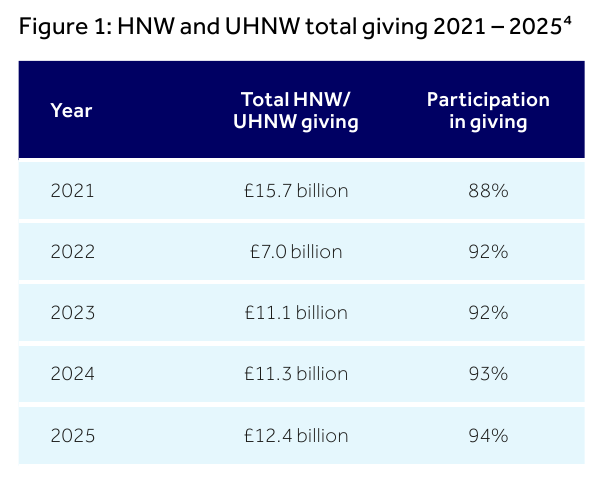
Figure 1 in the report shows how uneven the underlying series is. The estimate was £15.7 billion in 2021, fell to £7.0 billion in 2022, then rose to £11.1 billion in 2023, £11.3 billion in 2024 and £12.4 billion in 2025. The 2025 total is therefore still below the 2021 figure.
The 15.4% is an arithmetic average of yearly growth rates, not a compound rate, as the report’s own footnote explains. Averages of that kind are flattered by big swings, as a sharp fall followed by a sharp rebound pushes the average up. The report gives no 2020 figure, so the 15.4% cannot be reproduced from the table. On UK Fundraising’s own arithmetic, the four year-on-year changes implied by Figure 1 for 2021 to 2025 average about 3.7%.
The report also notes that part of the 2025 growth will be down to a change in the source used to size the HNW population, with WealthX estimates replacing Statista data.
A wide gap between the most and least generous
Isabelle Montague-Johnstone, Head of Philanthropy at Barclays Private Bank and Wealth Management, says “wealth alone doesn’t determine how much people give”. The report’s figures bear that out. Pooling data from 2020 to 2025, the top 10% of givers with £1 million to £5 million gave an average of £53,100 a year, while the lowest-giving fifth gave £400. For those with £5 million to £30 million, the equivalent figures were £119,300 and £1,400. The report concludes that engagement matters more than capacity to give.
At the very top, giving is concentrated. The Sunday Times Giving List, cited in the report, found that the UK’s top five philanthropists gave £3.07 billion in 2025, up 48%, led by Sir Chris Hohn, the UK’s first billion-pound donor at £1.44 billion. On UK Fundraising’s arithmetic, that equals roughly a quarter of the £12.4 billion estimate, though the report does not say how far the datasets overlap.
Satisfied donors, but few planning to give a lot more
In May 2026, 90% of wealthy donors said they were satisfied with their experience of interacting with charities: 52% very satisfied and 38% somewhat satisfied. Some 54% expect to increase their giving in the next 12 months, rising to 72% among those with more than £10 million.
The detail of their overall ambition is more modest than that suggests. Only 17% plan to give substantially more, while 37% expect to give slightly more and 39% about the same. The report presents the gap as an opportunity for charities to deepen relationships with existing supporters.
Katie Docherty and Charlotte Sherman of the Chartered Institute of Fundraising, interviewed for the report, say the strongest partnerships are long-term relationships, with donors wanting informed conversations about a charity’s mission, strategy and financial sustainability. Kawika Solidum of CSJ Foundation adds that donors do not want “donor theatre”.
Advice, intentions and the gap in support
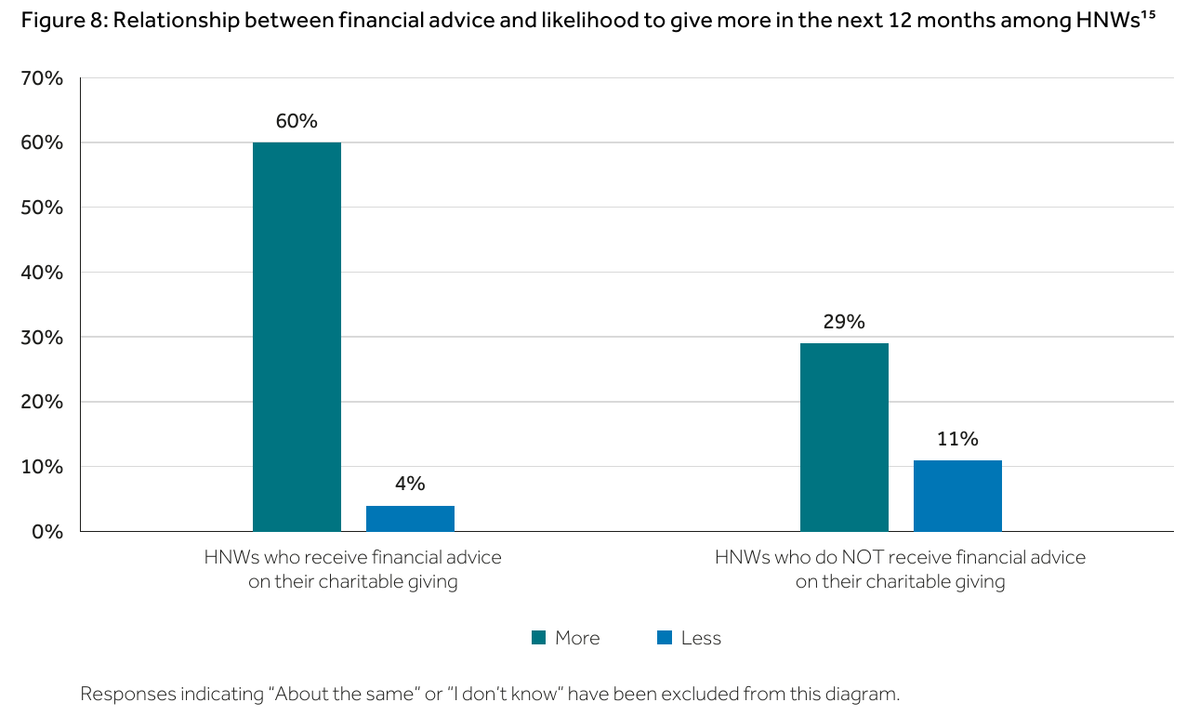
Donors who receive financial advice on their charitable giving are far more likely to plan to give more: 60% intend to increase their giving over the next 12 months, compared with 29% of those without such advice. Advised donors are also likelier to be very satisfied with their charity interactions, at 55% against 39%.
Yet 22% say their financial adviser or wealth manager has given them no guidance on giving. That rises to 30% among those with £1 million to £2 million, 42% among those with annual incomes below £100,000 and 46% among retirees. Only 39% are very satisfied with the advice they have received, compared with 52% for their experience of charities.
In the 2025 survey of 500 HNW individuals, donors mainly influenced by a professional adviser reported annual giving of £36,000, against £26,000 for those influenced mainly by charity contacts and peers and £18,000 for family and friends. The report is explicit that this does not demonstrate causation.
These are, of course, stated intentions, not recorded gifts, and the research cannot show whether advice prompts generosity or whether people already inclined to give more are the ones who seek advice.
In addition the report is published by Barclays, a bank that sells wealth management, so the finding that advice is a lever for giving is also an argument for its own services.
What fundraisers can take from it
- Ask about strategy, not just the gift. The report says wealthy donors led by charity relationships often lack a clear strategy, and that the most sophisticated fundraisers learn their donors’ strategic goals and how a gift supports them.
- Treat satisfied donors as prospects. With 90% satisfied but only 17% planning to give substantially more, the biggest opportunity may be in your existing supporter base.
- Build relationships with advisers. With 22% of wealthy donors receiving no guidance on giving, financial, legal and tax advisers and philanthropy specialists are potential routes to donors, and to better-planned gifts.
- Reach emerging wealth early. The report points to last year’s finding that 51% of wealthy individuals began making significant gifts before reaching £1 million, often without professional support.
The report also profiles three donor types through illustrative pen portraits:
- Family Mission Seekers
- Charity Champions
- and Purposeful Planners
NPC explains its market sizing method online.
- Barclays Private Bank publishes guide to giving for philanthropists (28 February 2024)
- UK financial sector failing to meet growing demand for philanthropy services (22 November 2023)
- Role of wealth advisors in growing high value legacy giving explored in new report (28 August 2024)
Related posts



About Howard Lake
Howard Lake is consultant editor of UK Fundraising. He founded the site in 1994 and successfully sold it in 2022. As director of Giving X Ltd he is exploring growing giving on a massive scale.
He is the founder of Fundraising Camp and co-founder of GoodJobs.