


Finalists announced for 2026 Blavatnik Awards for Young Scientists in the UK

Howard Lake | 11 February 2026 | News
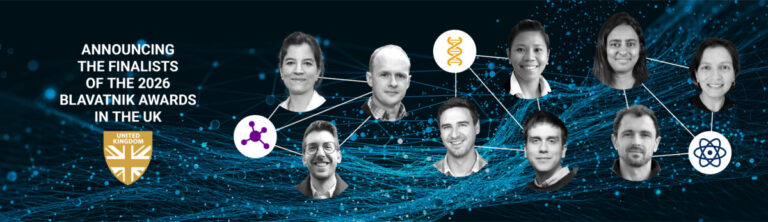
The finalists for the 2026 Blavatnik Awards for Young Scientists in the United Kingdom have been announced.
The awards are one of the largest unrestricted private funding initiatives supporting early-career researchers globally.
At the heart of the awards is the financial support provided by the Blavatnik Family Foundation, led by Sir Leonard Blavatnik.
Advertisement

This year the three laureates, to be announced on 24th February, will each receive an unrestricted prize of £100,000 (US$135,000). The remaining six finalists will each be awarded £30,000 (US$40,400).
Value of unrestricted funding
The unrestricted nature of the funds is unusual, providing the scientists with the freedom and flexibility to invest in high-risk, high-reward research, pursue novel lines of inquiry, or acquire necessary equipment without the typical constraints of grant-based funding.
An independent jury of expert scientists selected this year’s finalists from a pool of 91 nominees
representing 46 academic and research institutions across the UK.
UK and global funding awarded
Since the UK Awards launched in 2017, UK scientists have received nearly £3.7 million (US$4.96 million) in prize money.
The Blavatnik Awards also operate in the United States and Israel, so globally prizes totalling over $20 million will have been given to more than 500 scientists and engineers worldwide by the end of 2026.
Past Blavatnik Awards recipients have gone on to found over 50 companies, with six now publicly traded and collectively valued at over $10 billion. As such the Awards are an example of philanthropy designed to accelerate discovery and “ensure that discoveries with the potential to dramatically improve society are recognized, supported, and implemented.”
Indeed Sir Leonard Blavatnik’s stated intent is to accelerate the research of “outstanding, early-career scientists” and support “groundbreaking work and daring ideas”.
- V&A acquires David Bowie archive thanks to help of major donor gift (27 February 2023)
Update 26 February 2026
Three 2026 Laureates announced
The Blavatnik Family Foundation and The New York Academy of Sciences announced the three 2026 Laureates of the Blavatnik Awards for Young Scientists in the United Kingdom on 24 February at a gala dinner at the Banqueting House in London.
They each receive £100,000, the UK’s largest unrestricted prize for science.
The remaining six Finalists were each awarded £30,000 in recognition of their exceptional scientific contributions.
It is the second time in the United Kingdom that all three Laureates in the Blavatnik Awards are women
scientists.
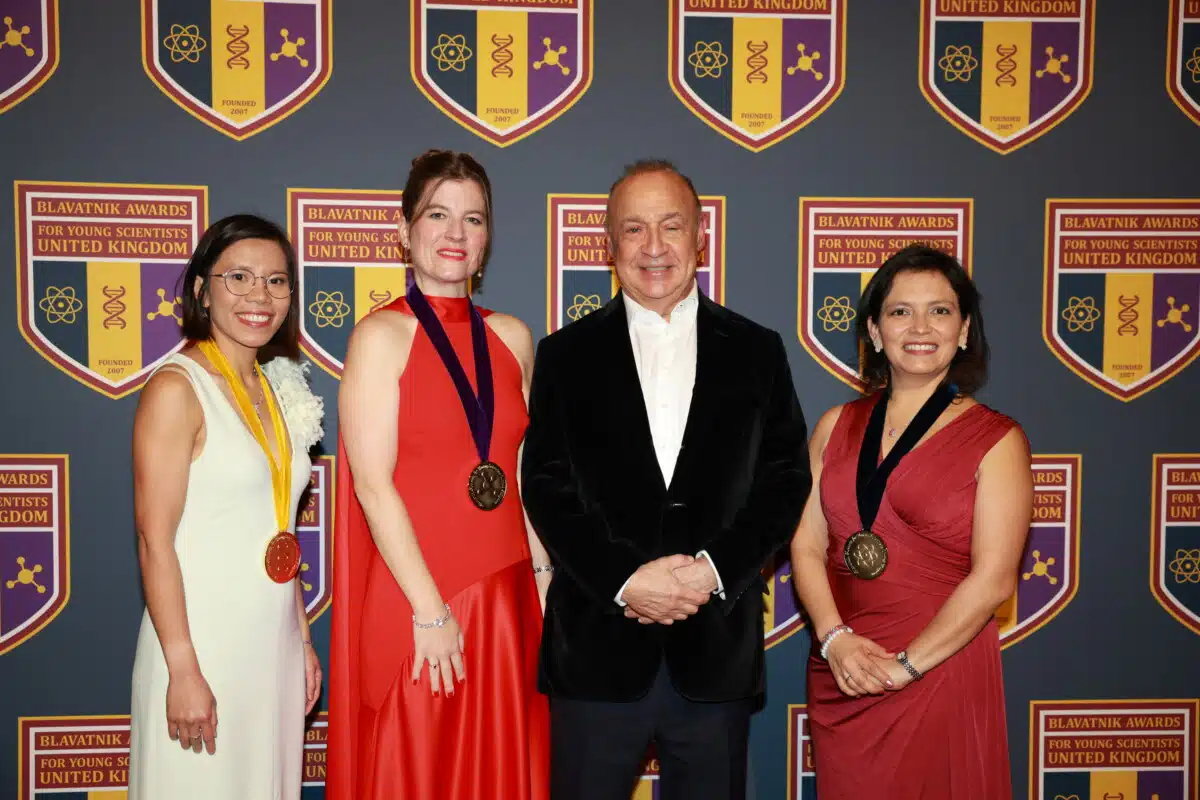
The 2026 Laureates are:
Life Sciences: Thi Hoang Duong (Kelly) Nguyen, PhD (MRC Laboratory of Molecular Biology)
Dr. Thi Hoang Duong Nguyen is a molecular biologist whose research provides critical insight into how telomerase — an enzyme that protects chromosome ends during cell division — functions during DNA replication, why it becomes dysregulated in premature ageing and cancer, and how specific regions of the enzyme could serve as future therapeutic targets. She was recognised for applying cryo-electron microscopy to render the first atomic-level model of telomerase.
Chemical Sciences: Maxie M. Roessler, DPhil (Imperial College London)
Prof. Maxie Roessler is a bioinorganic chemist who has uncovered the hidden steps in how cells generate energy through processes that rely on short-lived, highly reactive transfer of electrons. She was recognised for developing powerful, innovative electron paramagnetic resonance spectroscopy techniques that revealed the intricacies of these electron states and could guide future chemical
research, including the design of better catalysts and new functional materials.
Physical Sciences & Engineering: Paola Pinilla, PhD (University College London)
Dr. Paola Pinilla is an astrophysicist whose research deepens our understanding of the first steps of planet formation, unlocking new insights into the origins of planetary systems like our own. Combining telescope observations with advanced modelling, she discovered pressure structures in protoplanetary discs that trap dust and enable planet formation, revealing where planets are forming in the universe and how water and the building blocks of life can form within these discs.

About Howard Lake
Howard Lake is consultant editor of UK Fundraising. He founded the site in 1994 and successfully sold it in 2022. As director of Giving X Ltd he is exploring growing giving on a massive scale.
He is the founder of Fundraising Camp and co-founder of GoodJobs.