


Martin Lewis funds charity-run “Small Ideas Initiative” to turn public frustrations into policy

Howard Lake | 9 October 2026 | News
Consumer champion Martin Lewis is putting £175,000 of his own money into two charities to collect the public’s suggestions for everyday fixes, with a cross-party panel to choose the best.
The founder of MoneySavingExpert has launched the Small Ideas Initiative, asking the public to send in practical, non-controversial fixes to everyday frustrations. Two charities will run it, funded by a personal donation from Lewis.
Lewis said the public is invited to submit ideas at small-ideas.org. His examples include live sewage updates for beaches and standardised allergen menus. Other ideas cited in coverage include fairer car parking charges and clearer naming of tax-free childcare.
Advertisement
The idea dates back a year, when an interviewer asked him what he would have told the Government if he had been advising it. His reply was to come up with 100 small things that annoy people and fix one a day for the first 100 days. As he left the stage, he emailed himself a reminder to set up a “small ideas” institute.
Two charities at the centre
Lewis has given £175,000 to the two organising charities, Nesta’s Centre for Collective Intelligence and public participation charity Involve. They will collate the submissions and narrow them to about 200 workable ideas. These will then be developed into formal policy proposals, which Lewis says he will take back to the public for feedback.
A cross-party panel will then choose around 50 ideas, and the initiative will start trying to make them happen. Coverage says the panel runs from Reform UK to the Green Party. The panel consists of:
- Jonathan Bartley, Councillor and former Co-Leader (Green Party)
- Tracy Brabin, Mayor of West Yorkshire (Labour)
- Tamara Finkelstein, Chief Executive of Royal Academy of Engineering, former permanent secretary
- Danny Kruger MP (Reform)
- Polly Mackenzie, former Director of Policy (Liberal Democrats)
- Penny Mordaunt, former Leader of the House of Commons (Conservative)
- Emma Roddick MSP (SNP)
- Kwajo Tweneboa, social housing campaigner
Lewis has made the donation in a personal capacity. The initiative has no formal connection to MoneySavingExpert or to the Money and Mental Health Policy Institute, the charity he founded in 2016.
What can be submitted
Ideas should be straightforward, low-cost and non-controversial. They should be:
- Practical – a solution, not just a complaint
- Do-able – it must be something that could realistically change
- Relatively inexpensive – if it costs too much, government, regulators, or councils won’t do it
- Decent impact – whether it could help millions of people a little, or thousands of people a lot
- And crucially… hard to disagree with – the kind of thing that 80% of people, whatever their politics, would say “yeah, that makes sense”
Ideas that won’t be eligible include those that are:
- Too local – a drinking water fountain in your local park won’t cut it (a water fountain in every park may do)
- Overly political – no party lines, and no dog whistles
- Illegal – breaks the law, criminal or otherwise
- Harmful – nothing that harms people or animals
Topics range across money, shopping, housing, health, schools, transport, business, policing, justice and technology. The deadline for submissions is 12 November 2026, and the project is described as a year-long experiment.
Lewis said he was partly inspired by his campaigning on the council tax reduction scheme for people with conditions such as dementia. That showed him how a small change could have real impact.
Polly Mackenzie, formerly director of policy to Nick Clegg during his time as deputy prime minister, worked with Lewis on the idea. She told the Guardian it is about rebuilding confidence that government can sort things out, not about any one party having the right ideas.
Why it matters for fundraisers
The project puts charities in the role of delivery partners for public participation, rather than as campaigners or beneficiaries. It also shows how Lewis uses his personal giving. He previously set up the Coronavirus Poverty Fund, which distributed £3.4 million in grants to 415 small charities. Fundraisers working with high-profile philanthropists may find it a useful example of a donor funding charities to run an experimental, time-limited programme.
Lewis said in his launch post: “It’s time politics stopped ignoring the small stuff that can make lives better.”
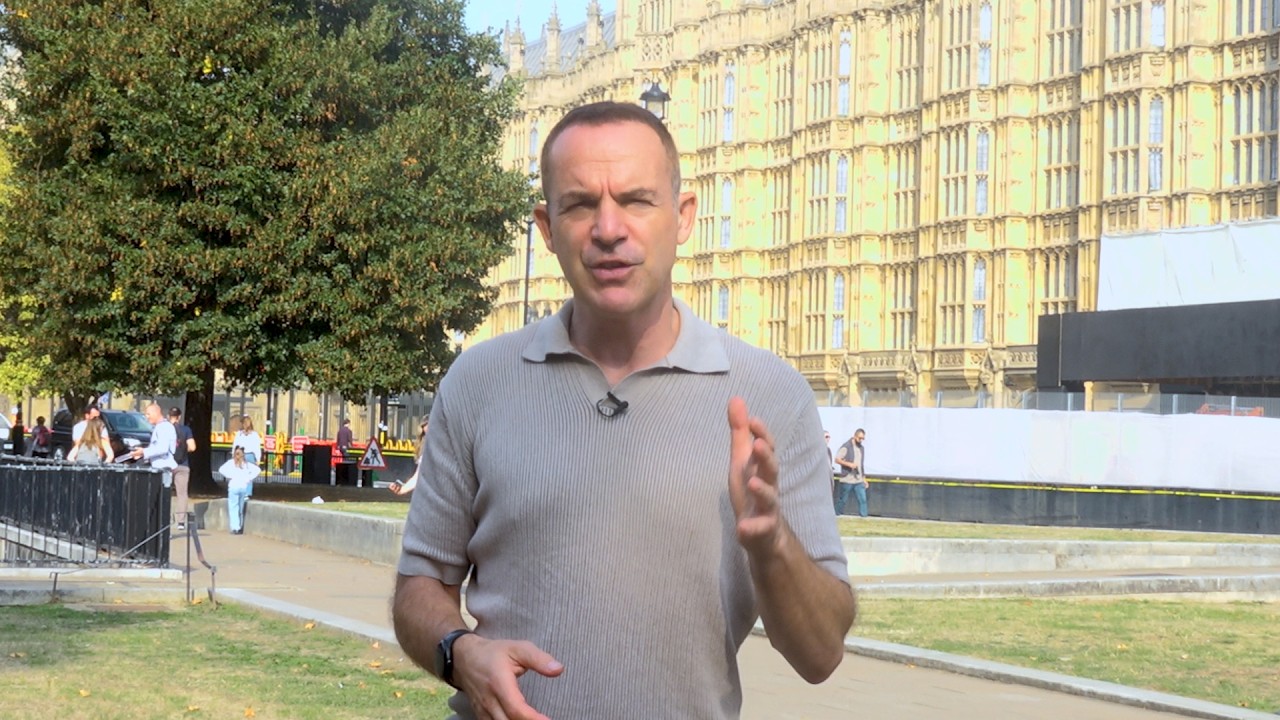
WATCH: Introducing The Small Ideas Initiative
- Local citizens advice services receives £625,000 from Martin Lewis’ fund (20 March 2017)
- Citizens Advice to receive £1 million from sale of MoneySavingExpert (1 June 2012)
- Vote for MoneySavingExpert.com’s new charities (16 July 2008)

About Howard Lake
Howard Lake is consultant editor of UK Fundraising. He founded the site in 1994 and successfully sold it in 2022. As director of Giving X Ltd he is exploring growing giving on a massive scale.
He is the founder of Fundraising Camp and co-founder of GoodJobs.