


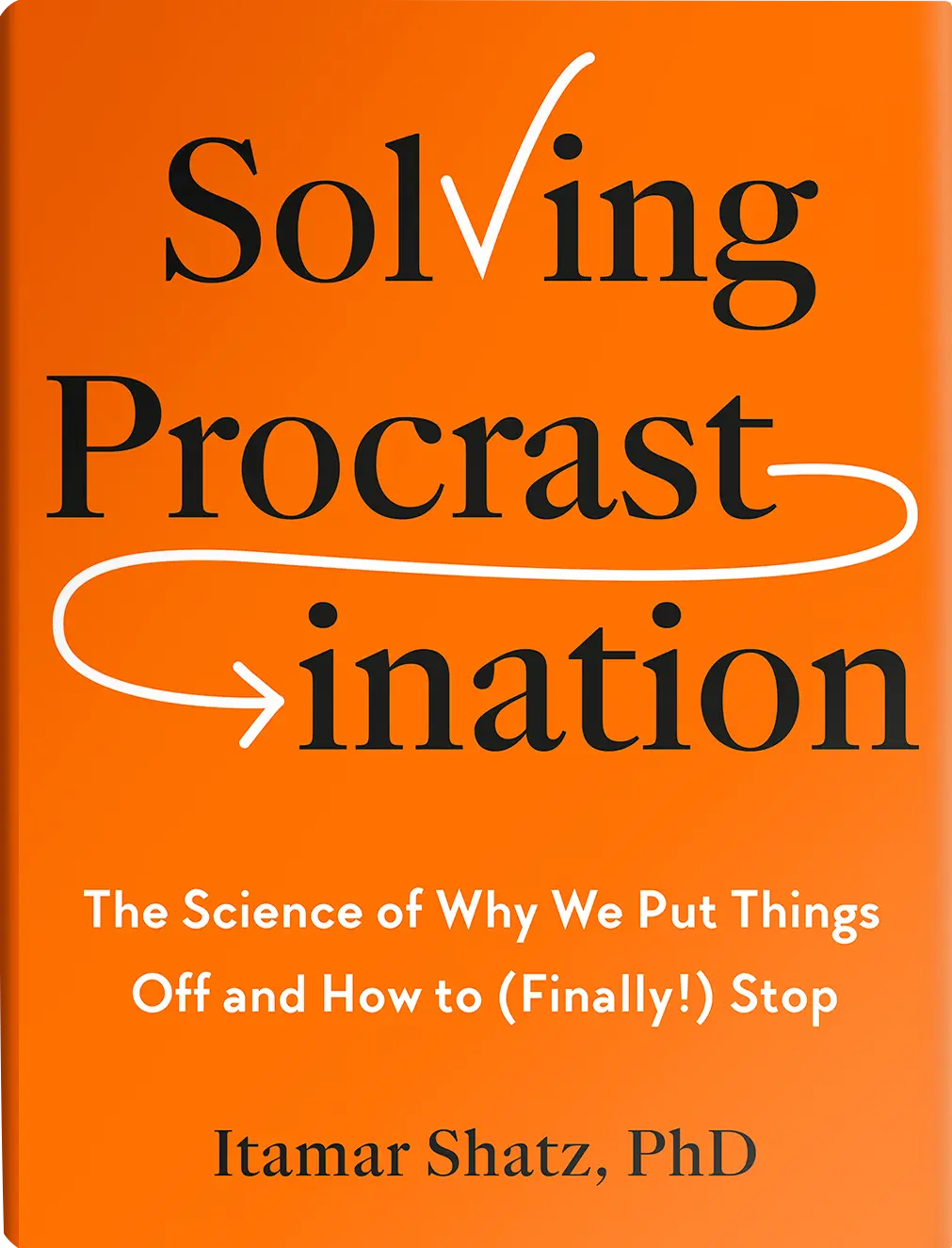
Solving Procrastination: The Science of Why We Put Things Off and How (Finally!) to Stop
A science-backed guide to overcoming procrastination, with direct relevance for fundraisers working in legacy giving, major gifts, and anyone trying to move supporters from intention to action.
Legacy fundraisers know the pattern well. A supporter expresses a clear intention to write or update their will, or to include a charitable gift. They mean it. And then nothing happens. Not because they changed their mind, but because writing a will is exactly the kind of significant, emotionally loaded task that procrastination feeds on. The same dynamic applies across major gift fundraising, planned giving conversations, and any appeal that asks someone to make a considered decision rather than an impulsive one.
It is not directed at fundraisers specifically but Dr Claire Routley recommended it, given her interest in why donors, and legacy donors in particular, don’t always act or make a final decision on writing their will and leaving a legacy.
Dr Itamar Shatz, an affiliated lecturer at Cambridge University and an experienced science communicator, has spent years researching the psychology of procrastination. This book, drawing on more than 500 studies in psychology, behavioural economics, and neuroscience, is his definitive account of why people put things off and what actually works to help them stop.
Procrastination is not laziness!
The book’s central argument is that most conventional advice about procrastination misdiagnoses the problem. Procrastination is not laziness, and it is not a time management failure. It arises from a specific set of psychological forces, including fear of failure, perfectionism, lack of perceived control, and the pull of more immediately rewarding alternatives, and it requires targeted tools to address each of them.
Shatz identifies nine distinct procrastinator archetypes (among them the Perfectionist, the Worrier, the Hedonist, and the Rebel) and explains what drives each one and what actually helps.
The practical toolkit is substantial: ten core anti-procrastination strategies, a step-by-step system for applying them, and case studies throughout. Shatz also documents the genuine costs of procrastination at individual, organisational, and societal level, including research suggesting that chronic procrastination is associated with a significant drop in earnings and costs employers an estimated $20,000 per employee per year in lost productivity.
Fundraiser: heal thyself
For fundraisers, the book offers two distinct kinds of value. The first is insight into what may be happening when supporters stall on legacy or major gift decisions, and how to think about support and follow-up in light of what the research actually shows about how people move from intention to action.
The second is more personal: Shatz’s framework applies as readily to the fundraiser who keeps putting off that difficult donor conversation or strategic planning task as it does to anyone else.
Reviews
Scott Barry Kaufman, author of Transcend, called it a book that will change your life. Barbara Oakley, author of A Mind for Numbers, described it as the book procrastinators actually need.
More information and resources are available at solvingprocrastination.com.
About the Author
Itamar Shatz holds a PhD from Cambridge University, where he teaches quantitative and computational research methods. He is an experienced science communicator whose practical writing has been read by millions of people, with links and references from the New York Times, Forbes, Harvard Business Review, TED-Ed, and The Tim Ferriss Show.
Related books
- Building Donor Loyalty (Sargeant and Jay)
- The Volume Trap (Schulman)
- Humanocracy (Hamel and Zanini)
Buy Solving Procrastination from Amazon.co.uk.
.
Buy on Bookshop.org Buy on Amazon 